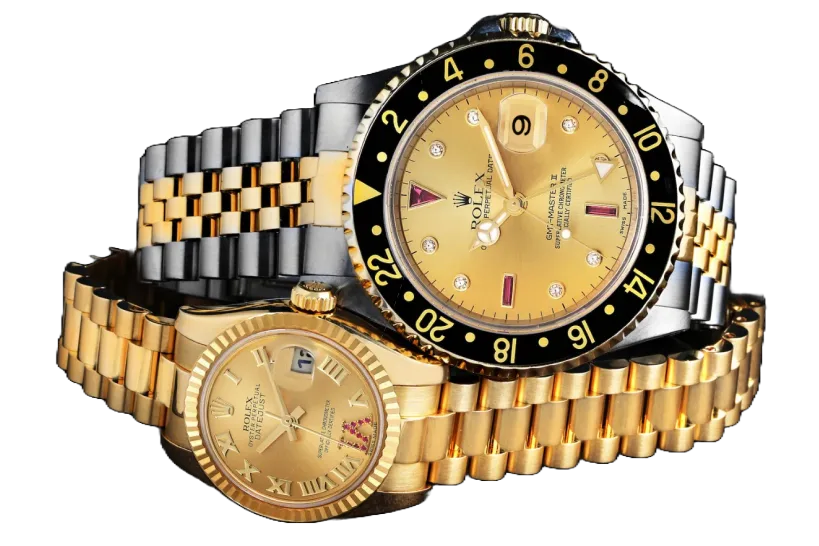

Selling a Rolex in Ho Chi Minh City is a different experience from selling one in London, Sydney or Singapore. The buyer pool is smaller, public price references are thinner, and what a buyer expects to see in the way of paperwork changes depending on whose counter you are standing at.
Maybe you are packing up after a posting, thinning out a collection you have outgrown, or freeing up money from a watch that has not left the safe in two years. Either way, the question of where to sell a luxury watch in Vietnam usually sorts itself out once you know three things about your own situation: how quickly you want the money, how much documentation you still have, and how much of the selling you want to handle yourself.
What Vietnamese Buyers Are Pricing Against
Vietnam has grown into a serious market for pre-owned timepieces over the last few years. The affluent population keeps expanding, with the number of high-net-worth individuals projected to reach 25,812 by 2026, and watches sit among the stronger categories in local hard luxury. That local picture sits inside a much bigger one, where pre-owned luxury watches were valued at around USD 32.3 billion in 2025.
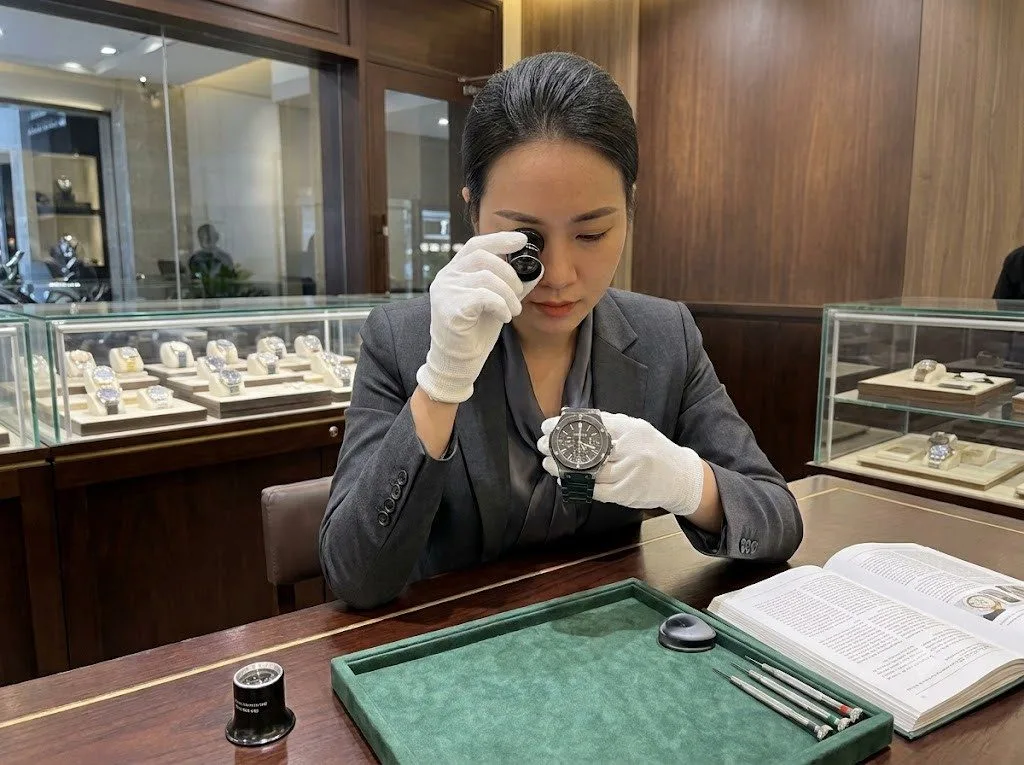
The good news is that buyers here are not guessing. Dealers track the same references you would look up yourself, from Chrono24 asking prices to auction results and dealer indices. Published figures put the average pre-owned Rolex transaction above USD 15,000 in the second quarter of 2026, with sport models such as the GMT-Master II and Daytona climbing well past that. Nothing stops you from arriving with the same numbers your appraiser is working from.
One thing to keep in mind. A listing price is not a payout. Sitting between the two are commission, insured shipping, authentication, warranty risk, and the weeks or months a dealer carries the piece before it finds a buyer. That gap is normal, and understanding it makes the conversation at the counter far less frustrating.
Brands That Move Quickly Here
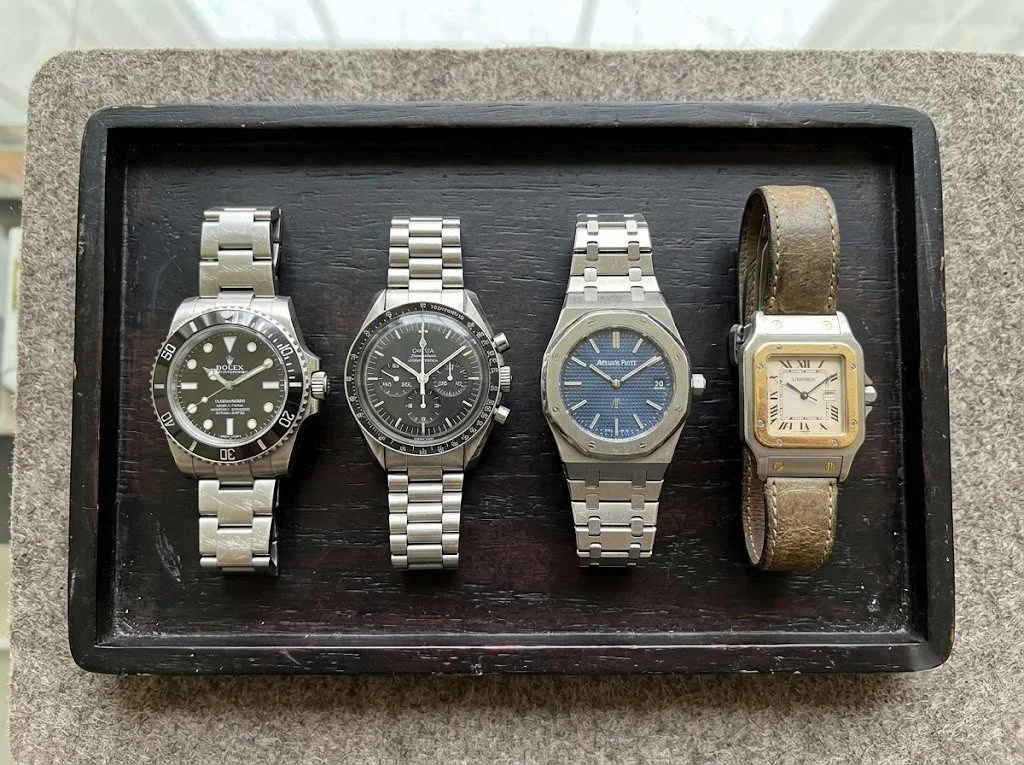
Liquidity varies a lot by name. The fastest sellers in Vietnam are:
- Rolex, particularly Submariner, GMT-Master II, Datejust and Day-Date references
- Omega, led by the Speedmaster and Seamaster families
- Audemars Piguet, especially Royal Oak in steel
- Cartier, where Santos and Tank models have a loyal local following
- Patek Philippe, Panerai, IWC, Hublot and TAG Heuer, concentrated around the recognisable references
Dress watches from Jaeger-LeCoultre, Breguet or Vacheron Constantin still sell perfectly well, they just take longer, because fewer buyers are looking for them at any given moment.
>>> Read more: Why More Customers Are Embracing Pre-Loved Luxury in a More Refined Way
Where to Sell a Luxury Watch in Vietnam: Your Five Options
Five routes are realistically open to you.
| Option | How It Works | Speed | A Good Fit If |
| Professional buyback house | An in-house appraiser inspects and authenticates, then makes a direct purchase offer | Same day to 1 business day | You want certainty, privacy and a fast transfer |
| Independent watch dealer | A local dealer buys for resale, or takes the piece on consignment | 1 day to several months | You know your reference well and want to compare offers |
| Pawn shop | A short-term loan against the watch, or an outright sale | Same day | You need cash immediately |
| Private sale online | You list on Facebook groups, forums or international platforms | Weeks to months | You have time, patience and complete documentation |
| Sale abroad or at auction | You ship or carry the watch to another market | Months | The piece is rare, vintage or collector-grade |
1. Professional Buyback Houses
These companies buy your watch outright rather than finding a buyer on your behalf. You sit with an appraiser, watch the inspection happen, and hear a firm number before you leave. Say yes and the money moves. Say no and you take the watch home, no hard feelings.
Because a buyback house authenticates in house and sells through its own network, missing paperwork is less of an obstacle here than elsewhere. If your warranty card vanished during a move three cities ago, this is the route where that hurts you least.
2. Independent Watch Dealers
Vietnam’s second-hand watch shops cluster in District 1 and District 3 in Ho Chi Minh City, and around Hoan Kiem in Hanoi. Some buy on the spot. Others prefer consignment, keeping the watch on display and taking a cut once it sells.
Consignment often lands a better final number, which makes it tempting. Just go in clear-eyed. Your money is not yours until someone walks in and wants the watch, and that might be next week or next quarter, with your Submariner sitting in a case you do not control until then.
3. Pawn Shops
Pawn shops, or tiệm cầm đồ, are everywhere and they are quick. They also lend money for a living rather than trade watches, so nobody behind the counter is likely to know what a transitional dial is worth. Expect a cautious valuation, and read the interest terms closely if you hope to buy the piece back later. For a short-term cash squeeze they do the job. For a five-figure timepiece you have no plans to reclaim, you can do better.
4. Private Sale Online
Listing the watch yourself reaches the most buyers. Chrono24 charges sellers a flat 6.5% commission and holds the buyer’s payment in escrow until the watch arrives, which is reassuring, though selling from Vietnam means you take the photos, answer the messages, arrange insured shipping and handle customs. The money reaches you only once delivery is confirmed.
Facebook groups and local forums move a lot faster, with no escrow behind them at all. If you go that way, three habits protect you:
- Meet at a bank branch during business hours rather than a café or hotel.
- Wait for the funds to clear before the watch leaves your hands, since transfers can be reversed.
- Never let a buyer take the piece away for verification without you.
5. Sale Abroad or at Auction
For a rare vintage reference or something with real collector provenance, a specialist auction in Hong Kong, Geneva or London reaches an audience Vietnam cannot match, and the hammer price can reflect that.
You pay for it in time. Between catalogue schedules and seller commission, months usually pass before the money arrives. For an everyday steel sport model, that wait rarely earns its keep.
>>> Read more: Why the Transaction Experience Is Becoming a Defining Factor in the Pre-Owned Luxury Market
What Changes the Offer You Receive
Two identical references can be valued very differently. These are the factors that do the most work.
Box, Papers and Service Records
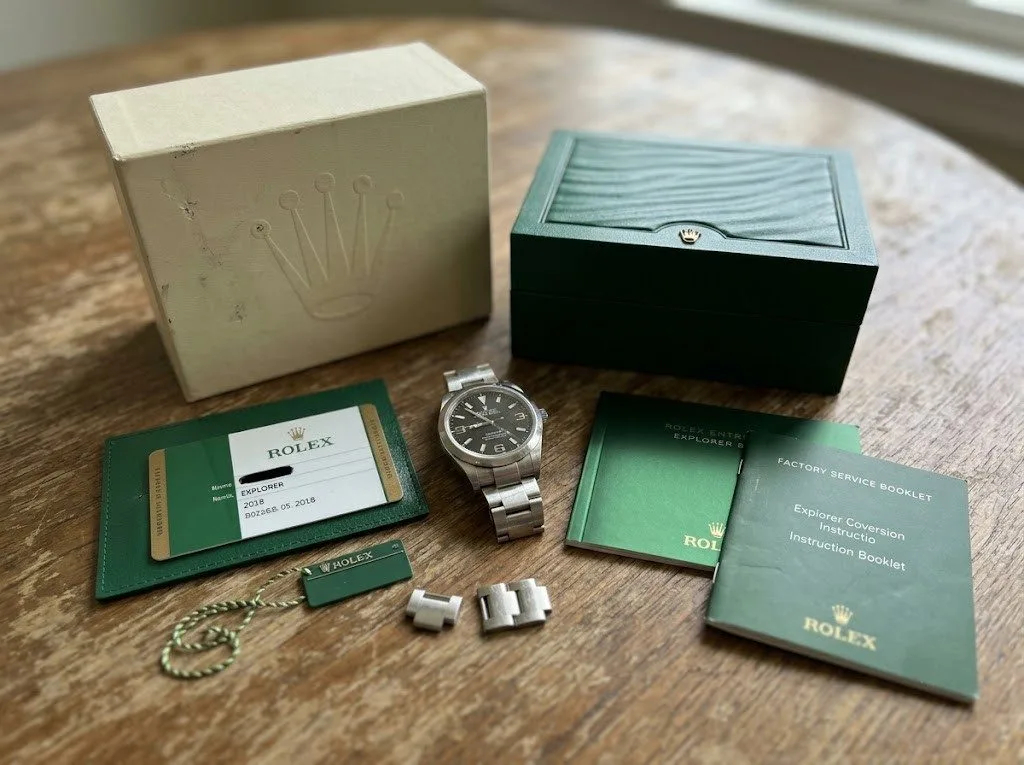
Completeness matters. Market analysis puts the premium for a full set at roughly 13% to 23% over an equivalent watch-only sale, with complete sets also closing around 13% faster. Warranty cards with matching serial numbers, the original outer and inner boxes, links removed during sizing, manuals and service invoices all contribute. If you still have the sizing links in a drawer at home, bring them.
Condition and Polishing
Condition is assessed against factory geometry rather than general tidiness. Sharp lugs, an unpolished case and an original bracelet all read as value. Over-polishing runs the other way, and heavily polished vintage examples can trade 30% to 50% below crisp, original ones. Resist the urge to have a watch buffed before an appraisal. A light clean is fine. A refinish is not.
Reference, Production Year and Demand
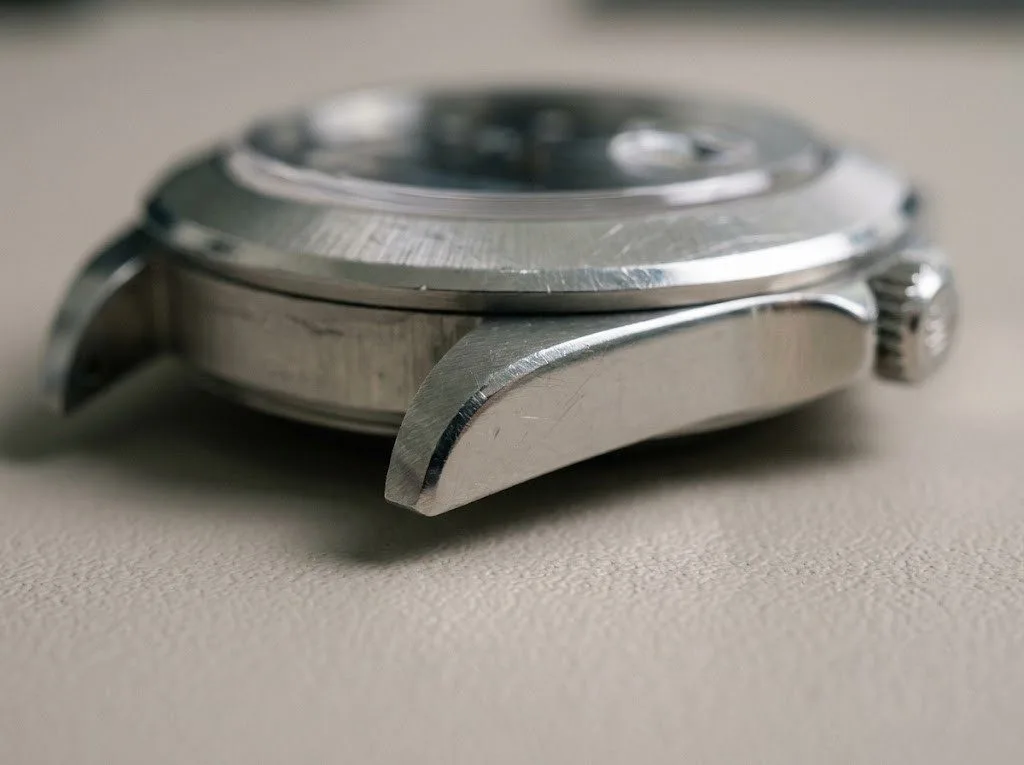
Within a single model family, one reference can carry a substantial premium over another. Discontinued dial variants, transitional production years and limited runs are priced on scarcity. This is where a specialist appraisal earns its place, because a general jeweller may miss the detail that a watch collector would notice immediately.
Selling Without Documentation
Plenty of watches in Vietnam arrive without papers, whether through gifting, inheritance or a purchase made overseas years ago. This lowers the offer, though it rarely blocks a sale. Professional buyers with in-house authentication can verify a piece through movement inspection, case and lug analysis, serial verification and bracelet examination. Expect a more thorough appraisal and a longer conversation.
A Few Things Worth Knowing If You Are an Expat
Selling here comes with a handful of local details that will not be obvious if your last watch sale happened somewhere else.
Authenticity Scrutiny Runs High
You may find the questions at the counter more searching than you expected. There is a reason for that. Vietnam has carried a reputation for counterfeit luxury goods for years, and the authorities have leaned into enforcement hard, with customs handling 23 intellectual property cases in the first four months of 2026 as part of a nationwide campaign.
None of that is bad news for you. Assuming your watch is what you say it is, careful buyers are exactly the ones you want, because a buyer confident in what they are holding is a buyer willing to pay properly for it. A written appraisal also gives both of you something to point at later.
Getting Paid and Moving Money Home
Almost every reputable buyer here pays by bank transfer to a local account, which suits you anyway, since it leaves a clean record. Cash is the option that needs planning. Anyone leaving Vietnam has to declare amounts above USD 5,000 or VND 15 million at the border gate, and bigger sums can require confirmation from a licensed credit institution.
Whichever way you are paid, keep the receipt. Six months later, when your bank in Melbourne or Manchester asks where a sizable transfer came from, that one piece of paper saves you an afternoon.
Sell Here or Sell at Home?
Honestly, it depends on the watch. A few things to weigh:
- A common steel sport model finds competitive offers in Vietnam without going anywhere.
- Rare vintage and collector-grade pieces often do better at specialist auctions in Hong Kong, Geneva or London, though you are trading months and fees for that.
- Shipping a valuable watch abroad brings insurance, customs declarations and a stretch of time when the piece is somewhere you are not.
- If you are leaving for good, selling before you fly beats carrying an uninsured watch worth more than your luggage through several airports.
How to Vet a Buyer Before You Hand Over the Watch
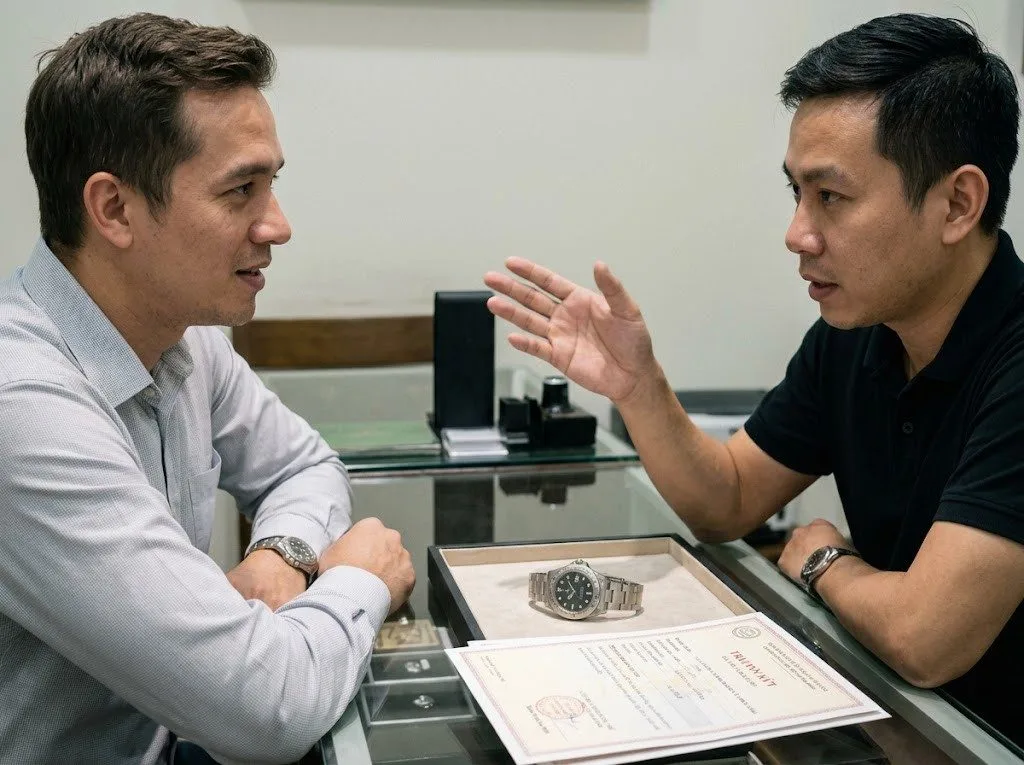
The offer matters less than whether the transaction is safe. Before you commit to anyone, here is what a good buyer looks like:
- A fixed business address you can walk into, rather than a meeting arranged at a café or a hotel lobby
- An appraisal done in front of you, with the reasoning explained instead of a number simply handed over
- A written offer stating the model, the reference and the condition assessment
- Payment by bank transfer, with the funds confirmed before the watch changes hands
- A straight answer on whether this is a purchase or a consignment
- No pressure to decide today
A few things should make you slow down. Anyone offering to pay you a deposit before an inspection, asking to take the watch away for testing somewhere else, or quoting a valuation from photographs alone is worth stepping back from.
The good news is that this is easy to test. Ask questions and watch what happens. A serious buyer in Vietnam will welcome them, and a serious appraisal takes twenty minutes or more rather than a glance across the counter. If either of those is missing, you already have your answer.
Preparing for Your Appraisal
A little preparation shortens the process and produces a more accurate valuation.
- Gather everything: Box, warranty card, service records, spare links, extra straps and the original purchase invoice if you have it.
- Note the reference number: It is usually engraved between the lugs or printed on the papers, and it tells an appraiser far more than the model name.
- Leave the watch as it is: No polishing, no aftermarket parts fitted, no attempts to repair a fault yourself.
- Check the service history: A recent service from an authorised centre supports the valuation, so bring the invoice.
- Research comparable sales: Look at recent completed sales for your exact reference rather than asking prices, so you arrive with a realistic range.
You should book an appointment rather than walking in, too. The buyer can have a specialist for your brand ready, and you are not being appraised at a busy counter with people waiting behind you.
Selling Your Watch With Us
At ALLU, we buy pre-owned watches, handbags and jewellery directly, with appraisals carried out in house by our own specialists. We work from private consultation rooms in Ho Chi Minh City and Hanoi, so your appraisal stays confidential and you are never under obligation to sell. We accept a wide range of brands and conditions, including pieces without box or papers, and we can arrange a home visit if you have several items to review.
Once you accept an offer, payment is transferred to your bank account quickly, with no fees deducted along the way.
Book your free appraisal today.
Message us on WhatsApp or Zalo at 0911 014 002, or visit our luxury watch buyback service page to arrange a private appointment.