
Most handbag owners in Saigon reach the same moment eventually. The Chanel flap has not left the wardrobe since last Tết, the Neverfull got replaced by something smaller, and the shelf is running out of room. Selling makes sense. Where to start is the part nobody explains.
The good news is that selling a designer handbag in Ho Chi Minh City is far easier than it was five years ago. There are real buyers here now, and real money behind them. What follows is what your bag is likely worth, the five places you can actually sell it, what pushes an offer up or down, and the local quirks that catch people out.
What Your Bag Is Actually Worth Here
Handbags carry luxury resale worldwide. They make up around 36% of global resale transactions, comfortably ahead of watches or jewellery, which means there is more pricing data behind your bag than you probably imagine.
Vietnam has caught up fast. The affluent buyer base keeps growing, with the number of high-net-worth individuals projected to reach 25,812 by 2026, and interest in pre-loved pieces has grown right alongside it. If you want proof that the buyers are local, two rare Hermès bags auctioned in Ho Chi Minh City in May 2026 drew 119 bids on a single lot and sold for a combined USD 554,000. Extraordinary bags in extraordinary circumstances, of course. The bidding still tells you something.
Where your own bag lands comes down mostly to the label on it.
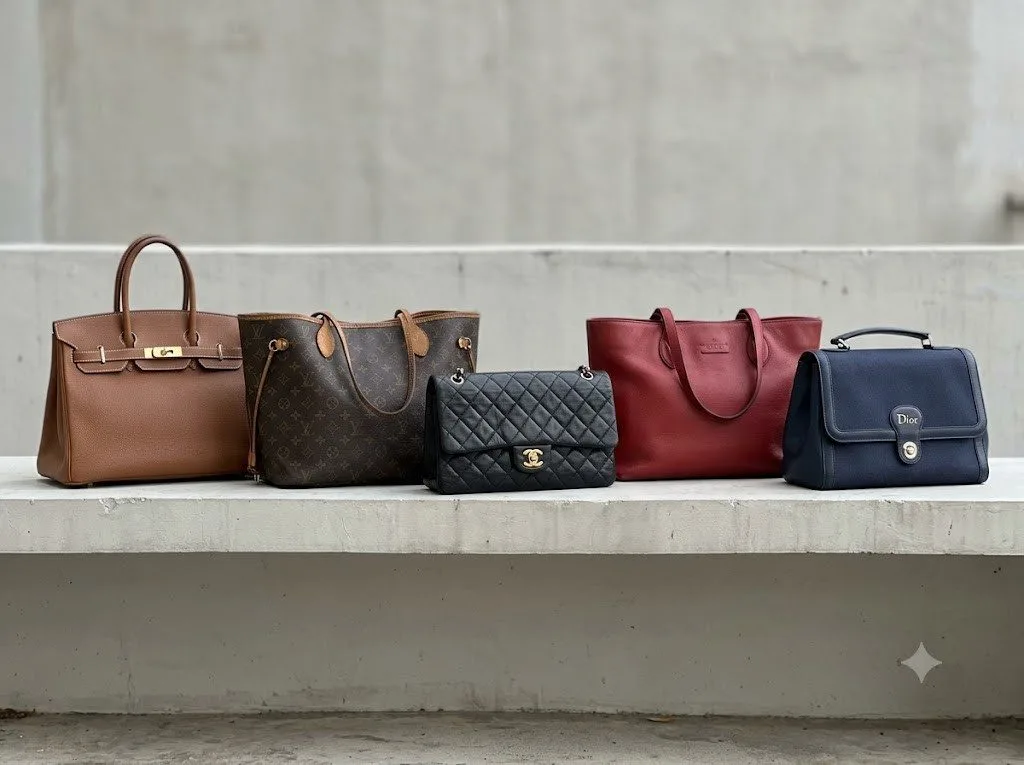
- Hermès: Birkin and Kelly bags are among the few luxury goods that routinely resell above original retail. Leather, size, hardware and whether the bag has ever been carried all move the figure.
- Chanel: Classic Flaps hold roughly 80% to 92% of their value, with size, caviar or lambskin, hardware finish and colour deciding where in that band you land.
- Louis Vuitton: Sells quickly and predictably, though usually at a wider gap from retail. How popular the model is matters most, followed by canvas condition and the state of the vachetta.
- Dior and Goyard: A loyal local following, especially for the Lady Dior and the Goyard totes. Colour, limited editions and a complete set do the heavy lifting.
- Gucci, Prada, Celine and YSL: Steady demand at a wider discount to retail, where the specific model matters far more than the brand name does.
One caution before you fall in love with a percentage. Those retention figures describe what buyers pay across a whole category, not what anyone will pay for your bag. Model, colour, condition and how many similar pieces are already listed can shift the number by thousands of dollars either way.
>>> Read more: Why More Customers Are Embracing Pre-Loved Luxury in a More Refined Way
Selling a Designer Handbag in Ho Chi Minh City
Five routes are realistically open to you, and the right one depends far more on your timeline than on your bag. Here is how each one works, who it suits, and what to keep an eye on.
1. Professional Buyback Houses
They buy the bag from you outright rather than finding a buyer on your behalf. You bring it in, a specialist inspects it while you sit there, and you leave with a firm number and usually the money. Say no and you take the bag home again, an hour older and nothing lost. They authenticate in house too, which matters more with handbags than people expect, because a good buyer can price your bag properly even if the receipt vanished three moves ago.
Best for: anyone who wants this finished by the weekend, values privacy, or no longer has the paperwork.
Worth knowing: the offer reflects what a professional can resell it for, so it will sit below what a patient private sale might eventually reach.
2. Luxury Consignment Boutiques
Ho Chi Minh City has a growing set of consignment boutiques, mostly around District 1, District 3 and Thao Dien. They take the bag, photograph it, put it on display, and pass you your share once it sells.
Best for: desirable, in-season pieces when you have months to spare and no urgent need for the cash.
Worth knowing: commission rates vary a lot. Get it in writing, and check who pays for cleaning and what happens if the bag picks up a mark while it is on their shelf.
3. Facebook and Zalo Groups
Vietnam’s resale communities are quick and free to use. They are also where most of the counterfeits circulate, so real buyers arrive sceptical and will want a lot of convincing before they part with money.
Best for: confident sellers with a well-documented bag and the patience to answer the same five questions over and over.
Worth knowing: payment fraud is the risk here. Meet inside a bank or a mall rather than at your apartment, and treat a screenshot of a transfer as nothing at all until the money appears in your own banking app.
4. International Platforms
Listing abroad reaches more buyers and occasionally a better price, particularly for Hermès and rare Chanel. Vestiaire Collective, for instance, charges sellers a 12% commission on most items plus a 3% payment processing fee.
Best for: high-value bags where a global audience is worth the work.
Worth knowing: the fee is the easy part. Photography, buyer questions, insured international shipping and customs all land on you, and the money only arrives once the bag has been delivered.
5. Friends and Personal Networks
The quietest route, and now and then the most rewarding one. Someone who has already admired the bag knows it is real, knows how you have looked after it, and needs no persuading.
Best for: bags with an obvious admirer already somewhere in your circle.
Worth knowing: be specific. Agree the price and write down every flaw, because a scratch nobody mentioned has a way of turning into an uncomfortable message a fortnight later.
What Lifts or Lowers the Offer
Two identical bags can be valued very differently, and the reasons are usually predictable. These are the things an appraiser weighs before quoting you anything.
Condition Does Most of the Work
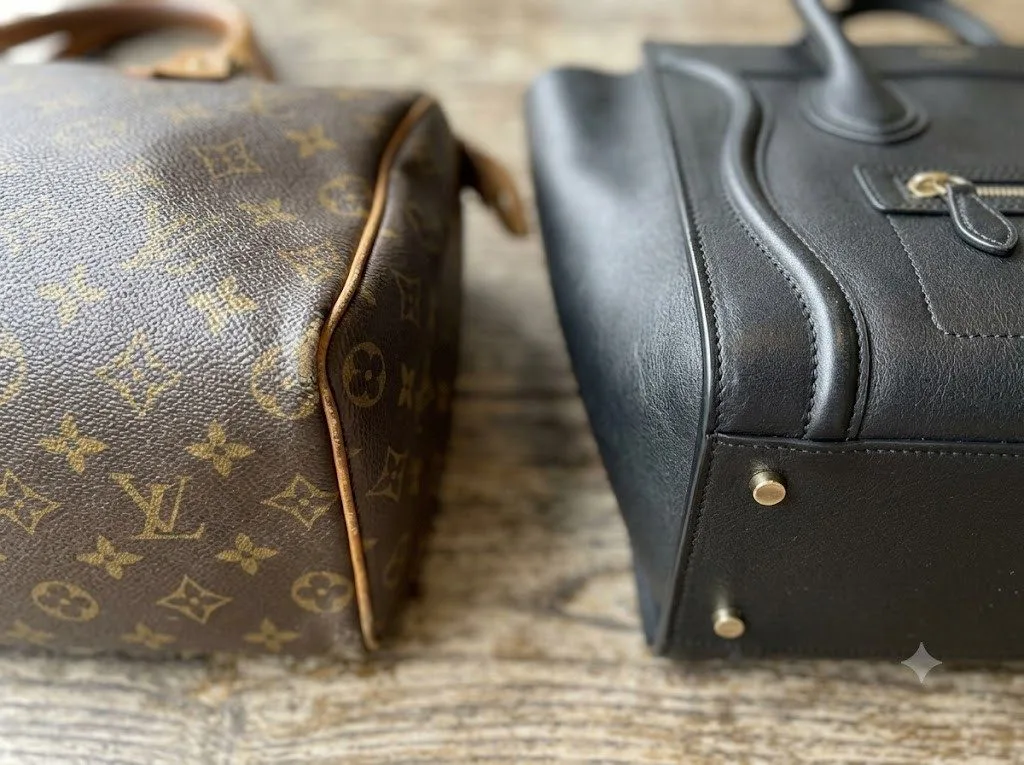
An appraiser looks at four things before anything else: corners, handles, lining and hardware. Broadly, bags fall into these bands.
| Condition | What It Looks Like | Effect on the Offer |
| Like new | Unworn or carried once, crisp corners, spotless lining, film still on the hardware | Top of the range for that model |
| Excellent | Faint marks on hardware, corners intact, clean inside, shape holding | Near the top, and sells fastest |
| Very good | Slight corner wear, handles beginning to darken, small interior marks | A solid mid-range offer |
| Good | Clear corner wear, darkened handles, interior stains, scuffed hardware | Noticeably lower, still very sellable |
| Fair | Heavy corner loss, cracked coating, odour, mould traces, sagging shape | Bottom of the range, often worth restoring first |
Completeness Adds Up
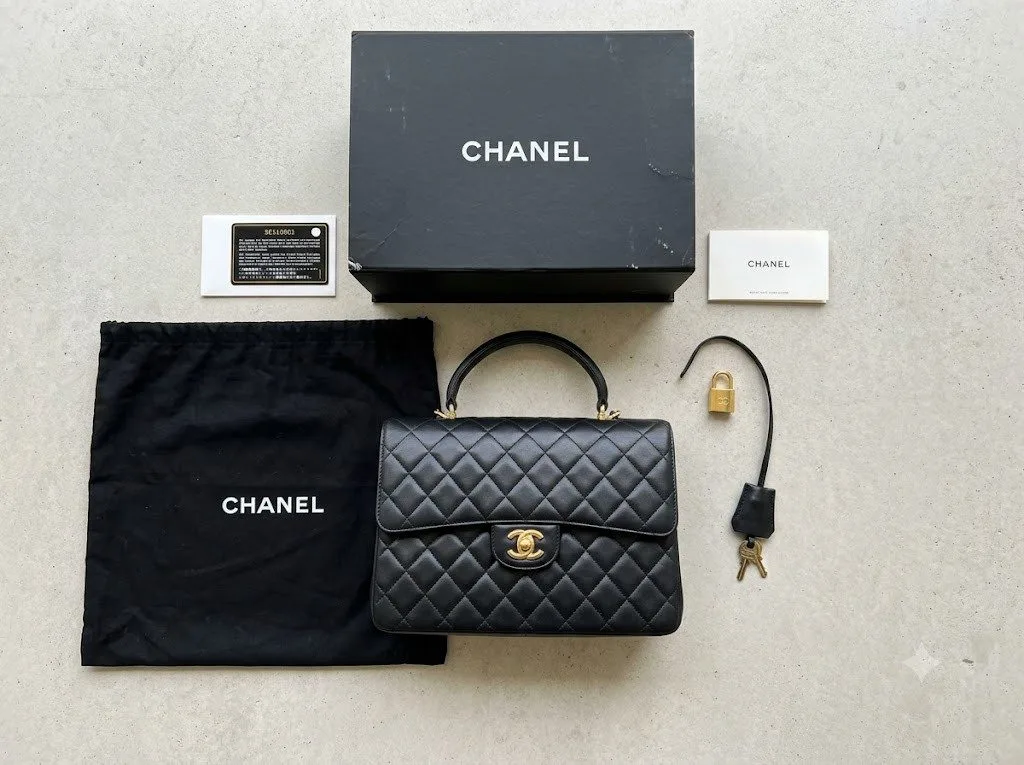
Each of these tells a buyer something, and together they make authentication much quicker.
- Dust bag and box: the easiest things to hold on to and the ones most often lost in a move.
- Authenticity card or microchip: Chanel cards, Louis Vuitton date codes and the newer embedded chips all speed verification along.
- Original receipt: never required, though it settles any question about where and when the bag was bought.
- Care booklet and tags: minor on their own, but they round out a full set.
- Straps, charms, clochettes: an Hermès clochette, key and lock missing from an otherwise perfect Birkin is a real deduction.
Model, Colour and Hardware
Neutral, year-round pieces suit the Vietnamese market best. A black or beige Classic Flap in caviar with gold hardware finds a buyer faster here than a seasonal colour in lambskin, and a bold limited edition may need one particular person who happens not to be shopping this month. Size counts as well, with small and medium Chanel flaps generally outperforming the jumbo.
Getting Your Bag Ready
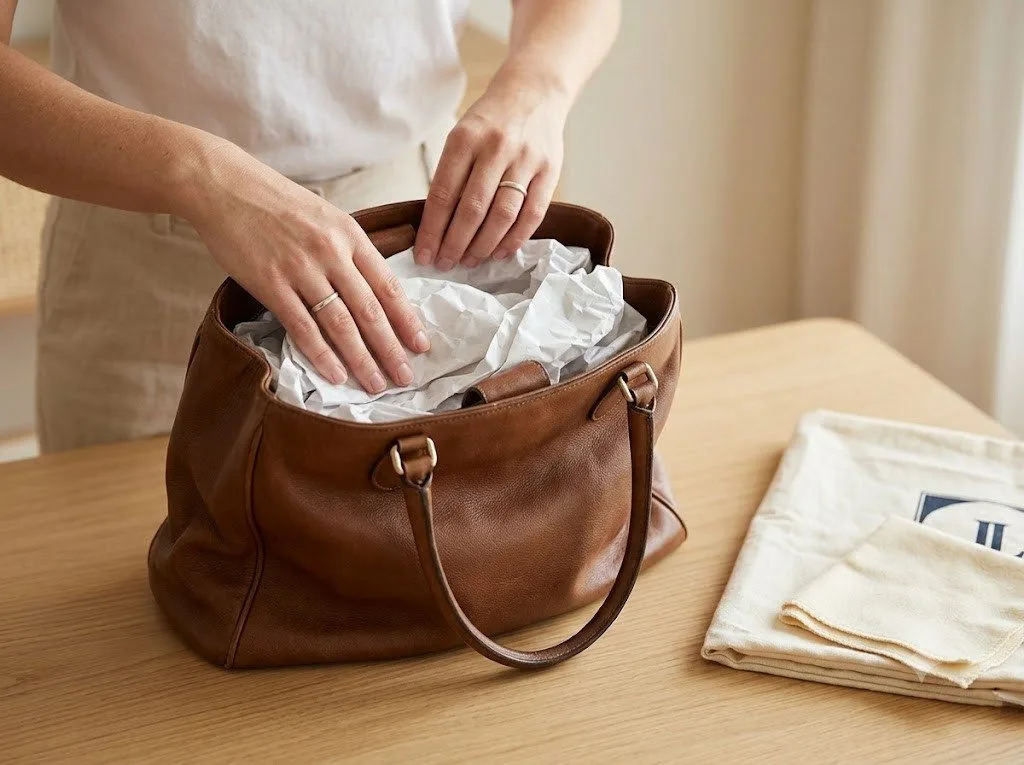
Half an hour of preparation really does change the number you hear.
- Empty everything: Every pocket, including the zipped one you forget exists. Old receipts, coins and stray lipsticks leave marks on linings.
- Clean it gently: A dry, soft cloth over the outside and a light vacuum within. No conditioner, no polish, no household cleaners, and nothing on the hardware.
- Round up the extras: Dust bag, box, authenticity card, care booklet, receipt, spare strap, clochette, lock and keys.
- Restore the shape: Stuff the bag before you bring it in. A collapsed bag reads as neglected even when it has been loved.
- Photograph it honestly: Daylight, all four corners, handles, interior, hardware. Flaws you hide surface during the appraisal anyway, and then they cost you credibility too.
- Look up recent sold prices: Completed sales for your exact model, size and colour, not asking prices, so you arrive with a range in your head.
You should book an appointment rather than walking in. The buyer can have a specialist for your brand ready, and you are not being appraised at a busy counter with people waiting behind you.
How to Know a Buyer is Legit
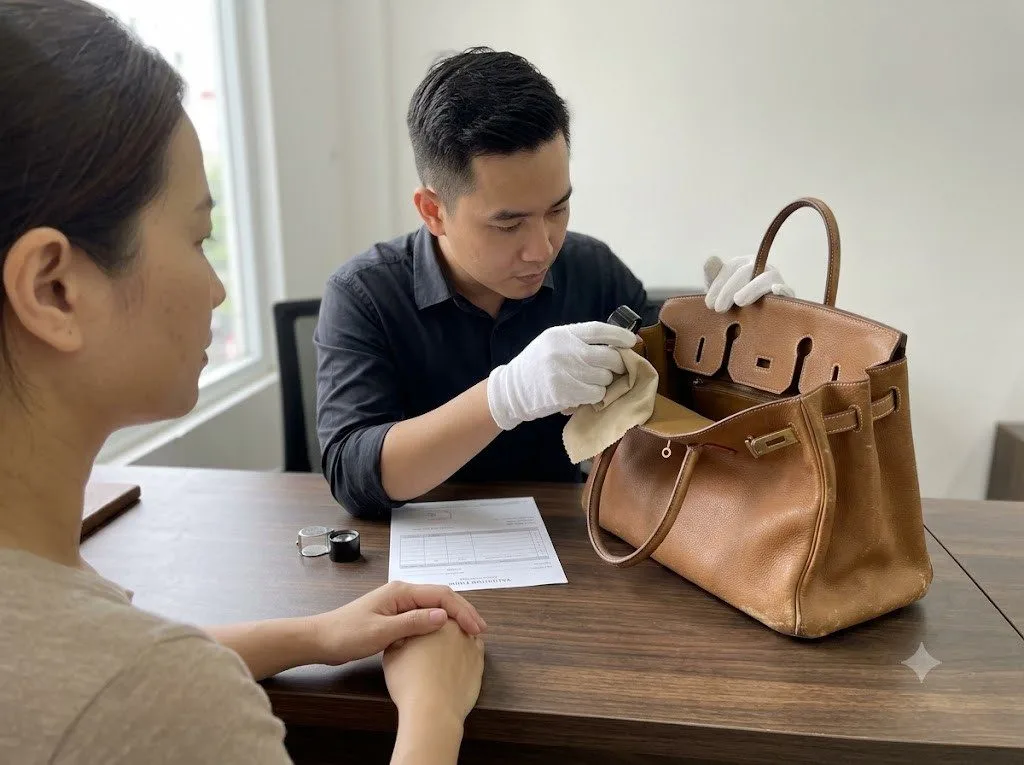
The offer matters less than whether the whole thing is safe.
Signs you are in good hands:
- A fixed address you can walk into, rather than a meeting arranged at a café or hotel lobby.
- The appraisal happens in front of you, with the reasoning explained instead of a number handed over.
- A written offer naming the brand, model and condition assessment.
- Payment confirmed in your own banking app before the bag changes hands.
- A straight answer on whether this is a purchase or a consignment.
- No deadline attached to the offer, and no pressure to decide today.
Signs to slow down:
- A figure that shifts when you hesitate, which suggests the first one was never based on much.
- A screenshot offered as proof of transfer, which proves nothing at all.
- Vagueness about who holds the bag and when exactly you get paid.
- A price that expires today, framed as an offer you will lose by thinking it over.
Anyone quoting a valuation from photos alone, asking to take the bag away for testing without you, or offering a deposit before they have inspected anything is worth stepping back from. The simplest test is to ask questions and watch what happens next. A serious buyer welcomes them, and a serious appraisal takes proper time rather than a glance across the counter.
Selling Your Handbag With Us
At ALLU, we buy pre-loved handbags, watches and jewellery directly, with every appraisal carried out by our in-house specialists. We work from private consultation rooms in Ho Chi Minh City, so your appointment stays confidential and you are never under any obligation to sell.
We accept a wide range of brands and conditions, including bags showing wear or missing their original packaging, and we can arrange a home visit if you have several pieces to go through. Once you accept an offer, payment goes to your bank account quickly, with no fees deducted along the way.
Book your free appraisal today.
Message us on WhatsApp or Zalo at 0911 014 002, or visit our luxury handbag buyback service page to arrange a private appointment.